Blog

Blog

Career development

Idealist or realist?
IMG_8883

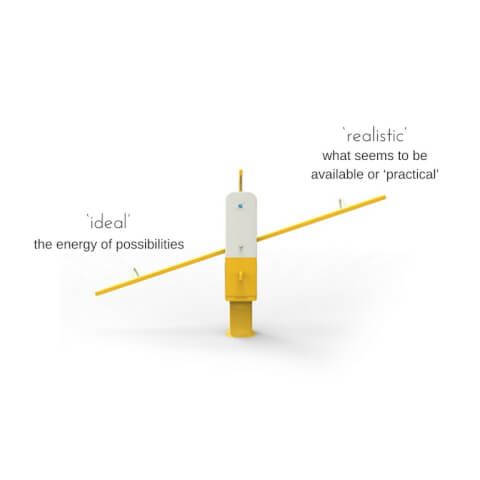
If you’re looking for a new direction in your career or in life more generally, do you (a) weigh in on the side of pragmatism, or (b) always follow your dreams?

The trouble with being relentlessly ‘realistic’ is that you can easily cut off your options too early and never discover what could truly drive you. Could you benefit from giving your ‘ideal’ and your ‘impossible’ a chance to grow?

– Written by Natalie Snodgrass Tan, Quiet Space Ltd

Perspective

The power of hope

IMG_8869There is a great deal of power in hope and an optimistic heart.

Hope knows you will get through it.

Hope believes there is always light in your darkness.

Hope, faith, love and gratitude can achieve what you thought was impossible.

– Written by Natalie Snodgrass Tan, Quiet Space Ltd

Control

The Happiness Equation

IMG_8865

This is from @neilpasricha and The Happiness Equation which is all about learning to be happy. I’ve posted before about happiness being a choice and available to you right here, right now, regardless of what circumstances life is throwing at you. So how do you train yourself to choose happiness?

Pasricha writes about the Big Seven ways to gain happiness: positivity, gratitude, meditation, movement, flow, kindness, and regularly unplugging from the speed of the world. As Pasricha says, happy people don’t have the best of everything – they make the best of everything. So, be happy first.

What are your thoughts on this? What’s your personal recipe for happiness?

Perspective

What company are you keeping?

IMG_8862

Ask yourself: What kind of company are you keeping? Are you choosing to spend time with good people who bring happiness into your life and help you grow and thrive? Are you doing the same for them?

And if not – what are you going to do about it?

Coaching

What does “doing your best” mean to you?

IMG_8618“Good, better, best, never let it rest – till your good is better, and your better best.”

Let’s be clear, striving for improvement is important. Putting in good effort is important. Not allowing yourself to give up as soon as the going gets tough is important. It is however all too possible to go way too far in the opposite direction and work yourself into the ground.

Doing your best does not equate to sacrificing your mental or physical health. It does ask that you try to cultivate a spirit of optimism and an attitude towards ‘failure’ that recognises that if you have tried hard and you have learnt something, then you have already succeeded. It is a journey towards realising that your value does not depend on your achievements.

So by all means keep striving and learning. Just don’t forget that you are already worthy. You don’t have to prove anything to anyone.

– Written by Natalie Snodgrass Tan, Quiet Space Ltd

CBT/CBC

Healthy and unhealthy negative emotions

IMG_8563Are you carrying unhealthy negative emotions?

Negative emotions aren’t necessarily bad – it is natural to experience concern, sadness, anger, remorse, regret, disappointment, healthy jealousy and healthy envy. Life is, after all, complex and difficult. What matters is how we respond to and channel these emotions into actions that help ourselves and others. Learning to accept these types of negative emotions is part of healthy psychological functioning.

This is not the same for unhealthy negative emotions like anxiety, depression, anger, guilt, shame, hurt, unhealthy jealousy and unhealthy envy. These types of emotions interfere with our ability to take positive and constructive action and can result in destructive (and often self-sabotaging) behaviour.

The first step is awareness. How are you going to choose to respond?

– Written by Natalie Snodgrass Tan, Quiet Space Ltd

Articles

Resilience

What doesn’t kill you makes you stronger.
I bend, I don’t break.
I always bounce back.

Do you use any of these metaphors when you talk or think about resilience? Personally, I like the picture of resilience that’s summed up by this plant.

sprout-1147803_960_720

It illustrates nicely the definition given by Carole Pemberton (2015) in Coaching for Resilience:

The capacity to remain flexible in our thoughts, feelings, and behaviours when faced by a life disruption, or extended periods of pressure, so that we emerge from difficulty stronger, wiser, and more able. 

In other words, resilience is gradual adaptation in the face of adversity.  Being resilient doesn’t mean you have to be somehow invulnerable to life’s hard knocks – it’s all about learning and growth, and the ability to steer your way constructively through difficulty. I think the danger of the popular characterisation of ‘bouncing back’ is that it gives the impression that recovering from setbacks is as effortless and instantaneous as the rebound of a rubber ball. You just pick yourself up and carry on as you were, utterly unchanged by the event. Except you’re not.

Even if you’re of the true grit school of thought, it’s important to recognise that resilience isn’t a you’ve-either-got-it-or-you-don’t thing; it’s a continuum. Life continually tests us, and our ability to respond well to this can vary depending on context and domain. You may be able to cope very well with pressure in your professional life, but feel crushed by the breakdown of a personal relationship. You may historically have had no problems navigating the ups and downs of life, but find yourself unexpectedly and completely derailed after being made redundant. Our resilience can become overwhelmed in all sorts of different ways – and we will all respond differently, too.1,2

I find it useful looking at this from the perspective of the three-factor model that combines the effects of genetics, external protective factors, and learning (diagram below adapted from Pemberton, 2015):

3-factor model of resilience

What this tells us is that although some people may be more naturally resilient than others, resilience isn’t just a product of our personality. Research has also shown the important contributions made by the support networks around us (the availability of ‘secure attachment’) and what we learn from experience. That latter factor is probably most crucial for me. I love the way Ann Masten puts it: resilience, she says, is ‘ordinary magic’: something we develop through the demands of living. I love this because it marks it out as something that can be available to all of us, even if we haven’t had the most fortunate start in life.

So how, then, can we cultivate resilience? It’s worth spending some time thinking about these factors:

  1. Finding meaning
    I’ve written before about purpose as a key factor in what drives us – the desire to connect to a greater and meaningful cause. Purpose gives us direction and a reason to keep going. What purpose can you find in what you may be going through? What can you take from this experience that you can channel positively into something meaningful?
  2. Flexibility
    Fixed patterns of thinking stop us being able to see the larger picture and its possibilities for learning and growth. How can I widen my perspective? What other ways are there to think about this situation? What can I learn from this setback?(For more on this, I recommend Carol Dweck’s work on fixed and growth mindsets.)
  3. Support
    What company am I keeping? Resilience is not developed in social isolation. What positive and mutually supportive relationships can I build?
  4. Mindfulness
    Pain is typically seen as a problem. Mindfulness helps us learn to detach from our negative thoughts and feelings in order to observe and accept them without becoming trapped in them – moving forward despite them, rather than trying to remove them from our lives. As Camus says, the human condition is absurd. But man’s freedom, and the opportunity to give life meaning, lies in the acceptance of absurdity.
  5. Proactivity
    What action are you taking? Sometimes all we need to get ourselves out of a pit is to take back control – by taking one small step at a time.
  6. Perspective and taking responsibility
    Ask yourself these questions: What can you control about this situation? What contribution are you making to it?

What someone needs in order to help them become more resilient will of course vary. In coaching, there are many tools that can be drawn upon, including mindfulness, cognitive-behavioural approaches, narrative coaching, and positive psychology. If you’re interested in how coaching can help you build your resilience, why not get in touch?

– Written by Natalie Snodgrass Tan, Quiet Space Ltd


1I’ve previously written about how it’s not events in life that affect you, it’s the personal meaning that you attach to those events (typically because they’ve destabilised or taken away some core aspect of your sense of identity). It’s a little out of the scope of this article, though.

2It’s important to know that the loss of resilience is something that happens in response to normal life experiences. It is typically temporary. This needs to be distinguished from abnormal physical or psychological trauma, such as childhood abuse or involvement in a major road traffic accident. These kinds of traumatic life events are not part of our normal life experience, and any inability to cope with them is never any reflection on your capability. If this has happened to you, there is help out there. You may wish to read about PTSD (post-traumatic stress disorder) here.


Self-love

I Love Me

IMG_8504

And so should you. Love yourself, that is. Although you can love me too if you like, for bonus points. 😉

Seriously though, why is self-love such a hard-won battle? My 5-year old made me sad the other day when she said ‘I don’t like myself’ (she’d tried to do some writing in the car, which hadn’t met her expectations). These patterns of thinking can become part of our blueprints so early on and follow us all the way into adulthood. It’s so important to develop a growth mindset, learn how to build our resilience, and discover how to treat ourselves with compassion.

You are worthy, and you have always been enough. Not because of your achievements or your talents, but just because you are who you are. And you are much more precious and loved than you realise.

– Written by Natalie Snodgrass Tan, Quiet Space Ltd

Constructivism/constructionism

Storytelling

We are all storytellers, built for narrative. We create stories around ourselves, to explain the world and make meaning out of our experiences, both good and bad.

Our stories are acts of interpretation and reflect how we want to be seen and how we see ourselves. We have public stories, hidden stories, unspoken stories.

Rarely are our stories about ourselves objective truths – we select what goes into the story and signal to others how it should be understood.

Are your stories helping you or hindering you? Do you need to step back and think about whether to flex your thinking and change your stories?

One thing you can do to help yourself work through difficult stories that you want to change is to write about them, because the process of writing helps with cognitive processing. In other words, writing helps you to understand and make meaning out of the things that have happened to you, by allowing you to bring them into focus and express what have often hitherto been unspoken feelings. Writing your story can be powerfully cathartic and can open up the pathway to healing and renewal.

– Written by Natalie Snodgrass Tan, Quiet Space Ltd

Mental health care

Emotional boundaries

IMG_8475

I can’t stress enough the importance of self-care and establishing good boundaries. There is always an internal cost to expending emotional energy and you need to know when to step back and respect your own boundaries. It isn’t selfish; it allows you to decompress so that later on you can continue to give. It’s a bit like putting on your own oxygen mask first so that you can make sure you’re able to put on someone else’s.

Take care of yourself, ok?

– Written by Natalie Snodgrass Tan, Quiet Space Ltd